
Littering Prevention Campaign
International School of Choueifat - City of 6 October
Grades: K - 12
April 02, 2015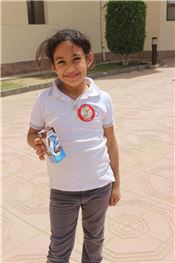
In order to promote a cleaner school environment, and to get students into the habit of not littering, the SLO® Discipline Department put together a littering prevention campaign.
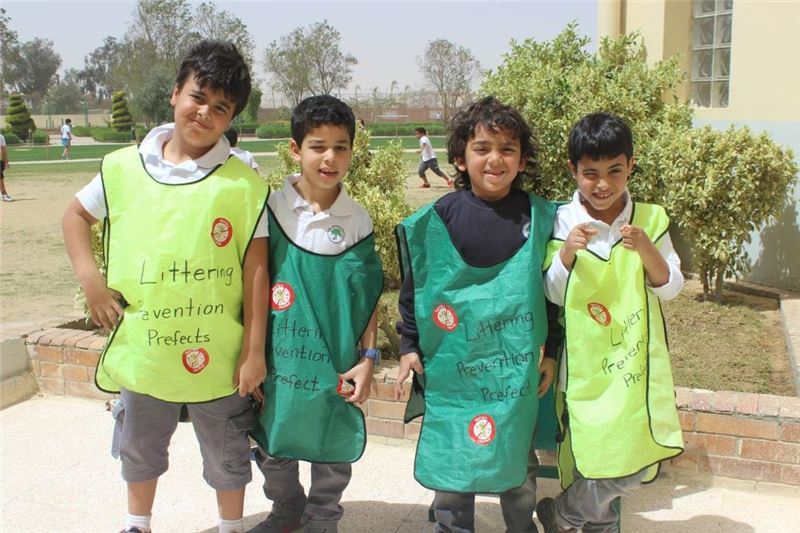
The week started by sending letters out to the parents to get them on board by asking them to discuss the importance of not littering with their children. A poster contest was held, in which students submitted their creative art work to help promote a cleaner school environment. The posters were then displayed all around school. Moreover, the winner had his/her poster scanned, and more copies were made to be displayed in various areas on campus. “Secret Littering Prevention” prefects were assigned each day to walk around the field during break and lunch in order to monitor students throwing their trash in the assigned bins. Students being responsible and disposing of trash in the assigned bins were rewarded with a motivational badge or a pin. These prefects were anonymous and changed each day. The students started realizing that if they threw their trash away they would get a pin but they didn’t know who passed the pins out. Stickers and pins were passed out to teachers to wear throughout the week as well, the stickers and badges had a drawing of an amusing animated bug and had the statement “Don’t be a litterbug” written on them. During the next week, the younger students were recruited to become “Littering Prevention Prefects” and wore jerseys that had the title “Littering Prevention Prefect “ on them. They enthusiastically walked around to encourage other students not to litter.
Math Relay
International School Frankfurt-Rhein-Main (ISF)
Grades: 7 - 9
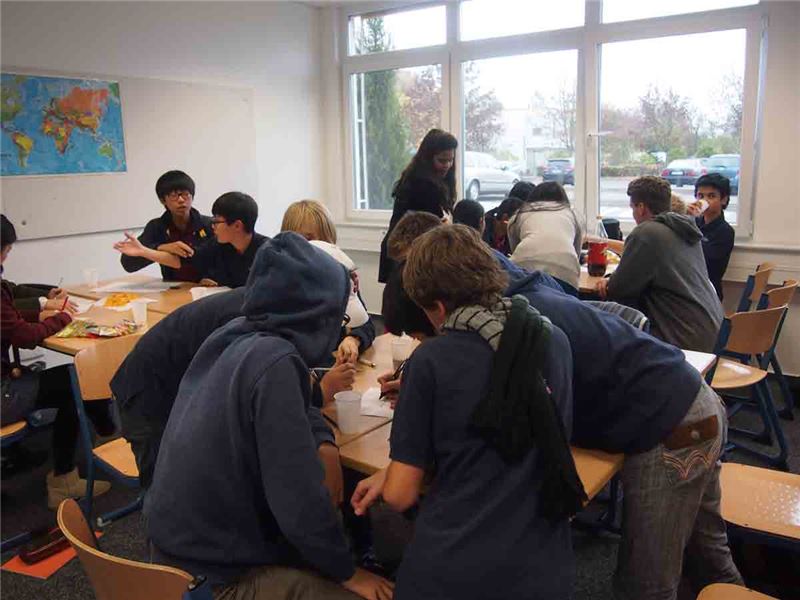
November 12, 2014The Math Relay is an opportunity for students interested in math to explore various math questions that may not be dealt with inside the classroom. By participating in the Math Relay, students can test their mathematical skills and logical thinking abilities.
Forming teams in groups of 4-6, students have the task of solving as many questions as possible in a set amount of time. A judge (SLO® prefect) is allocated to each and every team, and he/she is responsible for both marking the answers that his/her team produces and providing the corresponding team with the next question. Questions are passed out in the form of a small sheet of paper, and the question paper with the correct answer must be submitted to the judge in order to proceed to the next question. Students are given 2 chances to solve the question. If they manage to solve it in their first attempt, their team is rewarded with 2 points. If they solve it in their second attempt, they are only given 1 point. If they fail in both attempts, no points are given. Those who struggle also have the option of “passing” a question, whereby a team can skip a challenging question. At the end of the set time, the points are added up to see which team has the most, and the top 3 are awarded with prizes that range from sweets to trophies. In this competitive atmosphere, students have the chance to develop both teamwork and a greater understanding of mathematics.
Trivia Night
International School Frankfurt-Rhein-Main (ISF)
Grades: 1 - 12
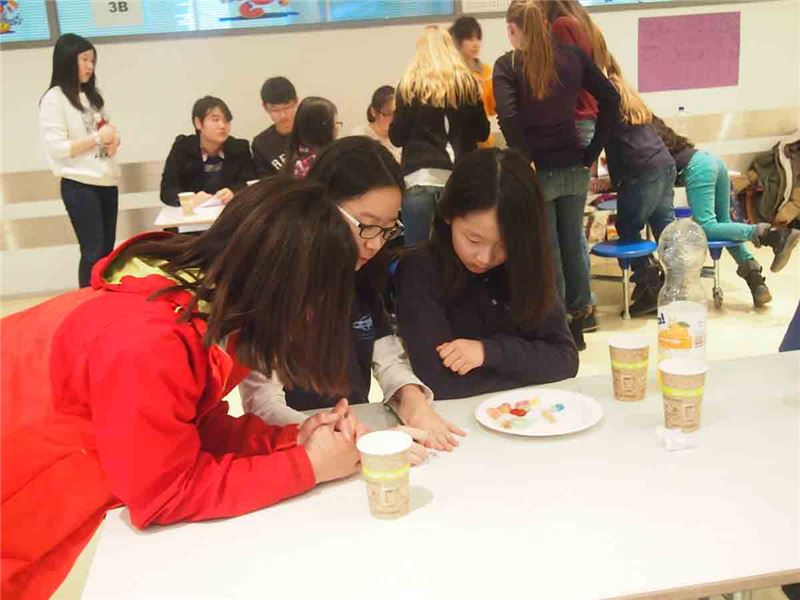
February 25, 2015Trivia Night is an opportunity for students to test the extent of their common knowledge. By answering questions that are based on a wide variety of topics, students learn interesting facts about the world that we live in.
Forming teams in groups of 4-6, students can even scout teachers as team members to participate in this friendly competition. The event is divided into multiple rounds, each of which deals with a different theme. For instance, one round may deal with science and include questions that relate to basic chemistry, biology, and physics. Each round lasts for 10 minutes, and teams have the task of solving as many questions as possible in the allotted time. To each team, a judge (SLO® prefect) is allocated for the marking of questions and for the passing out of questions. Questions are provided in the form of a small sheet of paper, and this must be submitted to the judge with the correct answer for a team to proceed to the next question. Teams are given two chances to solve a question: if they succeed in their first try, they are rewarded with 2 points. If they produce the correct response in their second attempt, they are only given 1 point. If they fail in both attempts, they receive 0 points. At the end of each round, the points are added up in order to keep track of each team’s total point. Trivia Night is a two-part event, and at the end of part 2, the teams with the top 3 total points will be awarded prizes. Drinks and refreshments are provided as students engage in this exciting activity.
Quote of the Week
May 03, 2015